July 3, 2026 · Texera Team
What Is GSM in Fabric? GSM Chart by Garment, and How to Choose
GSM stands for grams per square meter. It's the weight of one square meter of fabric, and the standard way to say how heavy or light a fabric is. A 180 GSM jersey weighs 180 grams per square meter; a 400 GSM fleece weighs more than twice as much.
GSM is the single spec that most affects how a finished garment feels, drapes, holds its shape and costs. Picking the wrong one is one of the most common reasons a first sample disappoints. This guide covers what GSM tells you (and what it doesn't), a GSM chart by garment, how to measure it yourself, and how to choose.
What GSM tells you, and what it doesn't
Higher GSM means denser, heavier fabric: more fiber packed into the same area. In practice that usually means:
- Higher GSM: more structure, more opacity, warmer, a "premium" heavier hand, and a boxier drape
- Lower GSM: lighter, cooler, more drape and stretch, and often more see-through in light colors
What GSM is not is a measure of quality on its own. A well-made 160 GSM combed-cotton tee can outlast a poorly made 220 GSM one. Yarn quality, knit or weave tightness and finishing matter as much as weight.
GSM chart by garment
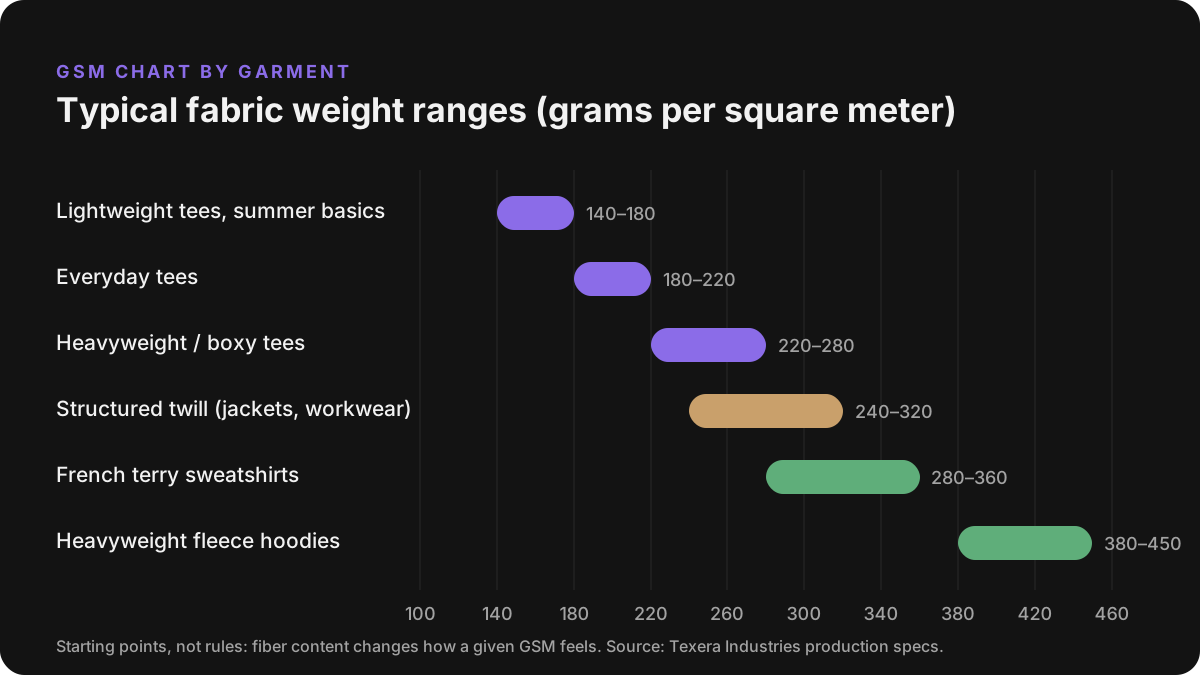
These are the ranges we work from on our own production floor. They're starting points, not rules: fiber content changes how a given GSM feels. A 220 GSM cotton-poly blend drapes differently from 220 GSM combed cotton.
| Garment | Typical GSM | How it feels |
|---|---|---|
| Lightweight tees, summer basics | 140–180 | Light, airy, drapes close to the body |
| Everyday tees | 180–220 | The all-round standard |
| Heavyweight / boxy streetwear tees | 220–280 | Structured, holds a boxy shape |
| Structured twill (jackets, workwear) | 240–320 | Stiff, durable, built for wear |
| French terry sweatshirts | 280–360 | Soft with some structure, loops on the inside |
| Heavyweight fleece hoodies | 380–450 | Dense, warm, premium hand |
GSM vs oz per square yard
US mills and blank brands often quote fabric weight in ounces per square yard (oz/yd²) instead. To convert:
- oz/yd² × 33.9 = GSM
- GSM ÷ 33.9 = oz/yd²
So a 6 oz tee is about 203 GSM, and a 400 GSM fleece is about 11.8 oz.
How to measure GSM
You don't need a lab. You need a sample of known area and a precise scale.
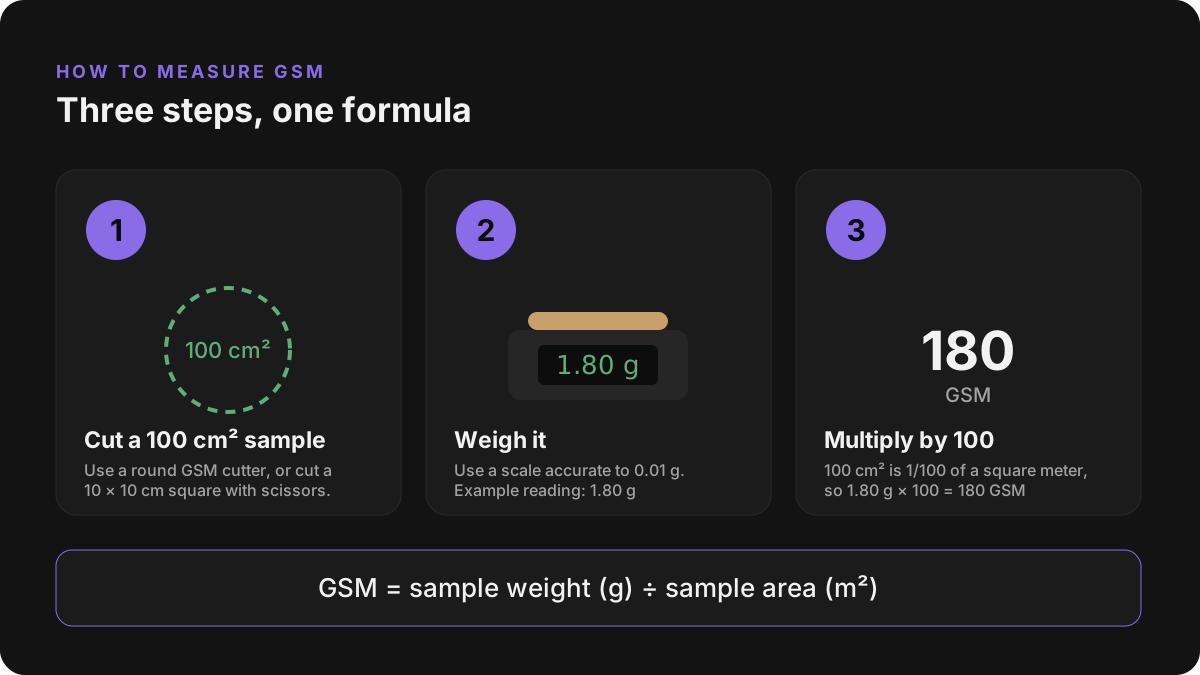
- Cut a 100 cm² sample. Mills use a round GSM cutter that cuts exactly 100 cm². Without one, cut a careful 10 × 10 cm square.
- Weigh it on a scale accurate to 0.01 g.
- Multiply by 100. 100 cm² is one hundredth of a square meter, so a sample weighing 1.80 g is 180 GSM.
For a finished garment you don't want to cut up, weigh a known area of fabric offcut from the same roll instead.
No GSM cutter? This video from the Seyi is Awesome channel shows how to calculate GSM with everyday tools:
Why GSM changes between swatch and finished garment
The GSM on a quote is usually the finished fabric weight, but dyeing, washing, brushing and compacting all change it slightly. That's why it's common to agree a tolerance (for example ±5%) in your tech pack, and to check bulk fabric against it before cutting starts.
Two more things move the number:
- Knit vs woven. Knits (jersey, fleece, French terry) feel softer and stretchier at the same GSM than wovens (twill, poplin).
- Brushing. Brushed fleece feels heavier and warmer than an unbrushed French terry of similar GSM, because the raised fibers trap air.

How GSM affects cost
Heavier fabric costs more, in two ways: you use more kilos of fabric per garment, and heavier constructions often cost more per kilo. In our cost calculator, fabric is priced at about $6.50/kg under 200 GSM, $8/kg from 200 to 320 GSM, and $10.50/kg above 320 GSM.
But GSM only affects the fabric line, not labor, trims or decoration. So a jump in weight moves your total per-unit price less than people expect. For 100 hoodies, moving from midweight to heavyweight fabric raises the fabric cost from about $3.60 to $4.73 per unit, while labor stays the same. Use the calculator to see the exact difference for your garment.
How to choose the right GSM
- Start from the garment and the feel you want. Use the chart above for a starting range.
- Think about climate and season. A 400 GSM hoodie is a winter piece; for year-round wear, 300–350 GSM French terry is often the better seller.
- Match it to your price point. Heavier reads as premium, so make sure your retail price supports it.
- When in doubt, sample two weights. The cost difference on a single sample is small compared with producing a whole run in the wrong weight. Mention both when you request a quote and ask for a side-by-side.
Frequently asked questions
Is higher GSM better?
Not automatically. Higher GSM means heavier, more structured fabric, which suits hoodies and boxy tees but is too warm and stiff for summer basics or activewear. The right GSM is the one that fits the garment, the season and the feel you want.
What GSM is a good T-shirt?
180–220 GSM suits an everyday tee. Go lighter (140–180) for summer or layering pieces, and heavier (220–280) for a structured, boxy streetwear fit.
What GSM is a good hoodie?
Most quality hoodies sit between 300 and 450 GSM. 320–380 GSM is a comfortable everyday weight; 400 GSM and up is a heavyweight, premium hoodie. Our hoodie manufacturer guide covers fabric choice in more depth.
Does GSM affect shrinkage?
GSM itself doesn't decide shrinkage. Fiber, construction and finishing do. Pre-shrunk or compacted cotton shrinks much less than untreated cotton at the same weight. Ask your manufacturer for the shrinkage tolerance they test to.
We knit and weave in-house from lightweight jersey through 320+ GSM heavyweight fleece. Tell us what you're making and we'll recommend a weight, or estimate your cost first.